
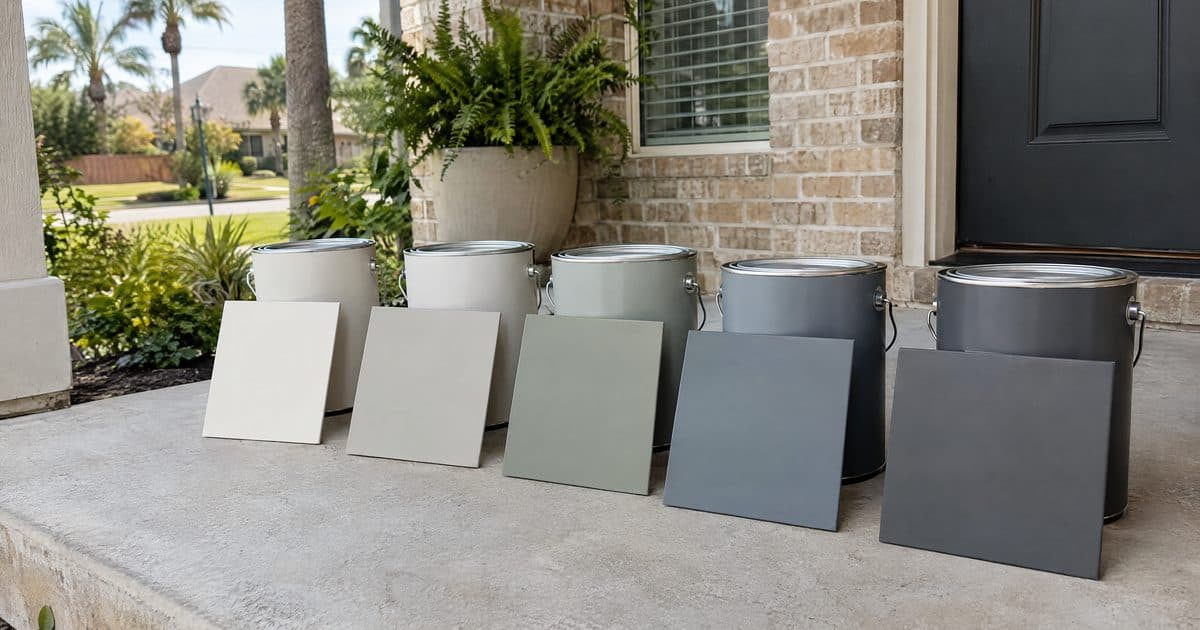
Houston is hard on exterior paint in three ways at once. Heat and sun break down the finish, humidity keeps surfaces damp, and mildew grows wherever walls stay wet and shaded. Choosing the right coatings is about matching each surface to the stress it actually faces — and accepting that no can of paint makes up for skipped preparation.
This post explains the choices in plain terms. It doesn't recommend brands. Most manufacturers make good exterior lines, and the difference between a job that lasts and one that peels is usually the work underneath, not the label on the can.
Paint types
Exterior acrylic latex is the default for most Houston siding and trim. It stays flexible as walls heat in the afternoon and cool at night, it lets moisture vapour pass out of the wall rather than trapping it, and it resists fading reasonably well. When people say "exterior paint" today, this is usually what they mean.
Oil-based and alkyd coatings are harder and level well, which is why they used to be standard on trim and doors. They become brittle over time and can crack as wood moves. Many older Houston houses have layers of oil paint on the trim, and painting latex directly over glossy oil without proper preparation is a common cause of peeling. That surface needs cleaning, sanding or a bonding primer first.
Elastomeric coatings are very thick, stretchy coatings used mainly on masonry and stucco to bridge fine cracks. They are not a general-purpose siding paint, and on wood they can trap moisture.
Sheen
Sheen is how much light the finish reflects. It affects both appearance and durability:
- Flat hides surface texture, patches and imperfections best. It is the usual choice for siding, but it marks more easily.
- Satin has a soft sheen, cleans better than flat and is a good all-round siding finish.
- Semi-gloss is harder and sheds water. It is the usual choice for trim, fascia and doors, where durability matters more than hiding the surface.
- Gloss is the hardest and shows every flaw. It is used mainly on doors and accents.
A common, practical scheme for Houston houses is flat or satin on the body and semi-gloss on trim and doors.
Primer
Primer is what lets the finish coat grip. It goes on:
- bare wood and new or replacement boards,
- repaired areas and filled holes,
- stains, such as water marks and tannin bleed from cedar or redwood,
- any area where the old coating has worn through,
- glossy old coatings that the new paint might not bond to.
Bonding primers are made for difficult surfaces. Stain-blocking primers stop discolouration bleeding through. Which one goes where is decided on the walk-through, wall by wall.
Mildew
Mildew is the Houston problem most people notice first: grey or black speckling on north walls, under eaves and anywhere shrubs keep a wall shaded and damp. Two things matter:
- Remove it first. Mildew has to be washed off and treated before painting. Paint applied over it lets it grow back through the new film.
- Then choose a mildew-resistant finish for the walls that stay damp. Most exterior lines include mildewcide; some are formulated specifically for humid climates.
Trimming shrubs back from walls and fixing gutters or sprinklers that keep a wall wet does as much as the paint does.
Heat and sun
South- and west-facing walls take the most sun and usually show wear first: chalking (a powdery surface that rubs off on your hand), fading and, eventually, cracking. Lighter colours absorb less heat than very dark ones, which can matter on wood and on vinyl trim. Some manufacturers publish guidance about dark colours on certain substrates; we follow the label for the product and the surface.
For timing your project around the weather, see the best time of year to paint a house exterior in Houston.
Choosing colours that work in Houston
Colour is a personal choice, but a few practical points apply here. Very dark colours absorb more heat, which can stress some substrates and show fading sooner on sun-facing walls. Mid-tones and lighter colours tend to hide dust and pollen better than very pale whites. And trim colour matters as much as body colour — crisp trim makes a house look freshly painted even as the body weathers.
Why preparation matters more than the product
A premium coating over chalk, mildew or soft wood fails early. A good mid-range coating over a washed, scraped, repaired and primed surface lasts. That is why our estimates list preparation as separate work and why the products are chosen after we have seen the house, not before.
We decide the coating system for each surface on the walk-through and name the products in your written estimate. Read more about our exterior painting process, see the context for Houston homes, or ask for a painting quote.
Homes built before 1978: We currently quote exterior painting on homes built in 1978 or later. If your home was built before 1978, federal lead-safe rules (EPA RRP, 40 CFR 745) apply to any work that disturbs painted surfaces — tell us the year built and we'll talk you through your options first.
Common questions
Thinking about your own house?
We walk the house in person and send a written estimate.