
Homeowners often want a simple number for how long a paint job lasts. Industry guidance and manufacturers do publish general expectations, but they come with conditions attached — proper surface preparation, the right product for the surface, normal exposure. In Houston, exposure is rarely normal. That is why the better question is: what decides how long your paint job lasts, and how do you tell when it is done?
What decides how long paint lasts
Preparation
This matters more than anything else. Paint applied over chalk, dirt, mildew or loose old paint bonds to that layer rather than to the house, and fails with it. Paint applied to a washed, scraped, repaired and primed surface has something solid to hold on to.
The coating and how much of it
Better exterior coatings resist fading and chalking for longer, and two full coats outlast one thin one. Trim and doors last longer in a harder, higher-sheen finish. We explain the choices in choosing exterior paint for Houston heat, humidity and mildew.
Exposure
In Houston, each side of the house ages differently:
- South and west walls take the strongest afternoon sun and usually fade and chalk first.
- North walls and shaded areas stay damp and are where mildew and peeling show up.
- Low on the wall — near sprinklers, flower beds and splash-back from gutters — wood stays wet and rots.
- Trim, fascia and window sills catch water and break down before the siding does.
The surface
Fiber-cement and masonry generally hold paint longer than wood, which moves with moisture and temperature. Older wood that has been repainted many times can carry layers that crack as a stack.
The signs it's time to repaint
Walk around the house once a year, in daylight, and look for these:
- Chalking. Rub the wall with your hand. If it comes away coloured with powder, the binder is breaking down.
- Fading. Compare a sunny wall with a protected spot, such as under the eaves or behind a shutter. A big difference means the finish has weathered.
- Hairline cracking. Fine cracks let water in and lead to flaking.
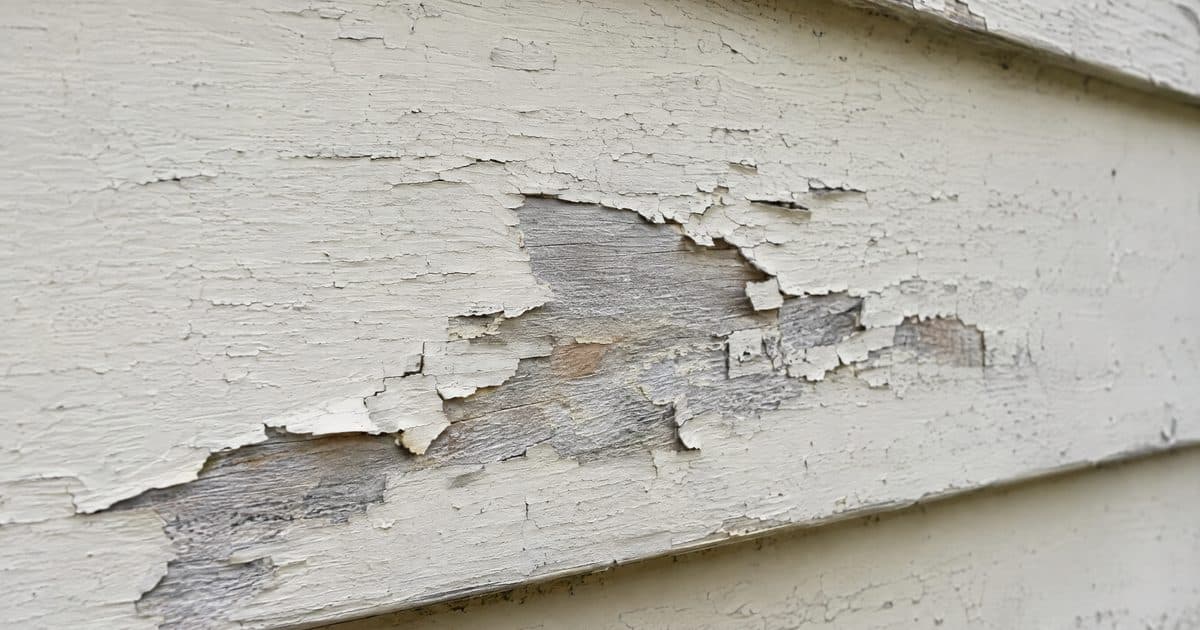
- Peeling and flaking. Paint lifting at the edges, often first on trim and the lower courses of siding.
- Bare wood. Any spot where wood shows through needs attention before the next rainy season.
- Mildew that returns quickly after washing.
- Caulk gaps around windows, doors and trim joints.
- Soft wood. Press a screwdriver gently into trim and the bottom boards of siding. If it sinks in, there is rot.
The last two are the important ones. Paint is the house's weather barrier, and once water is getting behind it, the cost moves from painting to carpentry.
Habits that make paint last longer
A few small things stretch the life of a paint job on any Houston house:
- Keep sprinklers off the walls. Adjust heads so they water the beds, not the siding. A wall that is soaked every morning will peel and rot at the bottom no matter what is on it.
- Keep gutters clear and downspouts extended. Overflowing gutters soak fascia and trim, and short downspouts splash water back onto the lowest boards.
- Trim shrubs and trees back from the house. Leave enough space for air to move and the wall to dry. Branches that rub the siding also wear through the finish.
- Wash the house gently once a year. A soft wash removes dirt and early mildew before they get established. High pressure isn't needed for maintenance and can do harm.
- Re-caulk as gaps appear. A tube of exterior sealant on an opening joint is cheap compared with the rot that follows when water gets in.
- Touch up small failures early. A chip on a window sill or a scrape on a corner board, primed and touched up promptly, keeps water out of the wood.
None of this changes how the paint was applied, but it removes the moisture that shortens its life.
Repaint early or late?
Repainting a little early, while the old coat is still sound, usually means less scraping and fewer repairs — the job is mostly washing, spot-priming and two coats. Waiting until paint is peeling widely and wood is exposed means more preparation and, often, replacement boards. On a Houston house the cost of waiting tends to show up as rot.
Trim and the sun-facing walls can be done on their own between full repaints if they wear out first.
What happens on a repaint
A repaint starts with an in-person walk-through. We look at each elevation, test for soft wood, note the existing coating and any mildew, and then send a written estimate with preparation, repairs and painting listed separately. Our exterior painting page explains the process step by step, and our page on Houston homes covers the housing we see around the city.
When you are ready, ask for a painting quote.
Homes built before 1978: We currently quote exterior painting on homes built in 1978 or later. If your home was built before 1978, federal lead-safe rules (EPA RRP, 40 CFR 745) apply to any work that disturbs painted surfaces — tell us the year built and we'll talk you through your options first.
Common questions
Thinking about your own house?
We walk the house in person and send a written estimate.